


Matsuo Seibaku: Tokyo’s Pressure-Cooker Ramen
New Kid on the Old Block
I grew up in Futako-Tamagawa, and Soshigaya-Okura is a bit north of there. It's still the quiet, residential Setagaya that I have a soft spot for, so I didn’t need much of an excuse to check out something new in the area.

Matsuo Seibaku (松尾製麦) gave me a good one: a ramen shop built around noodles boiled in a pressure cooker, which isn’t something you see in ramen very often.

The shop has been absolutely blowing up since it opened and is only open for lunch.
Why the Noodles Are the Whole Point
The shop is run by Matsuo Akito, who came up as store manager at Ramen Hirai in Fuchu. Hirai is a well-regarded name, so the pedigree carries some weight walking in. It opened in late February 2026.

The house-made noodles are thick, flat-ish, and heavily crimped. They go through a pressure cooker first, get shocked in cold water, then get reheated in a standard noodle boiler before they hit your bowl.

It’s a technique borrowed more from the udon world than ramen — some noodle nerds call the pressure-cooked version “gummy noodles” over there — and the result is a strange, good kind of contradiction: firm on the inside, soft on the outside, with a fluffy give up top that gives way to a dense, mochi-like chew underneath.
I don’t fully understand the physics of how a pressure cooker gets you there but the noodles alone are worth the trip.

It’s a small counter operation — twelve seats, cashless only, lunch hours only (11:00–15:00), and capped at roughly 90–100 bowls a day. There’s also a specific queueing system: you buy your ticket, staff tells you when to come back, and you’re called by the number on your receipt rather than holding a spot in line the whole time. But now can now reserve a spot (fast pass) on TableCheck. Thank goodness — this place is popular.
The Chuukasoba
The base bowl is a chuukasoba (ramen) built on a pork bone and seafood double soup. It's a dense, layered broth meant to stand up to a noodle this thick and this chewy. It’s meaty in a way that hits you before you even taste it: the broth has a funky pork smell that’s immediate and, honestly, in line with the style at Hirai, where Matsuo trained.

That shop leans into a heavier, meatier register rather than smoothing it out, and you can taste that same instinct here. He’s clearly refining his process, but he’s not refining the flavor into something polite.
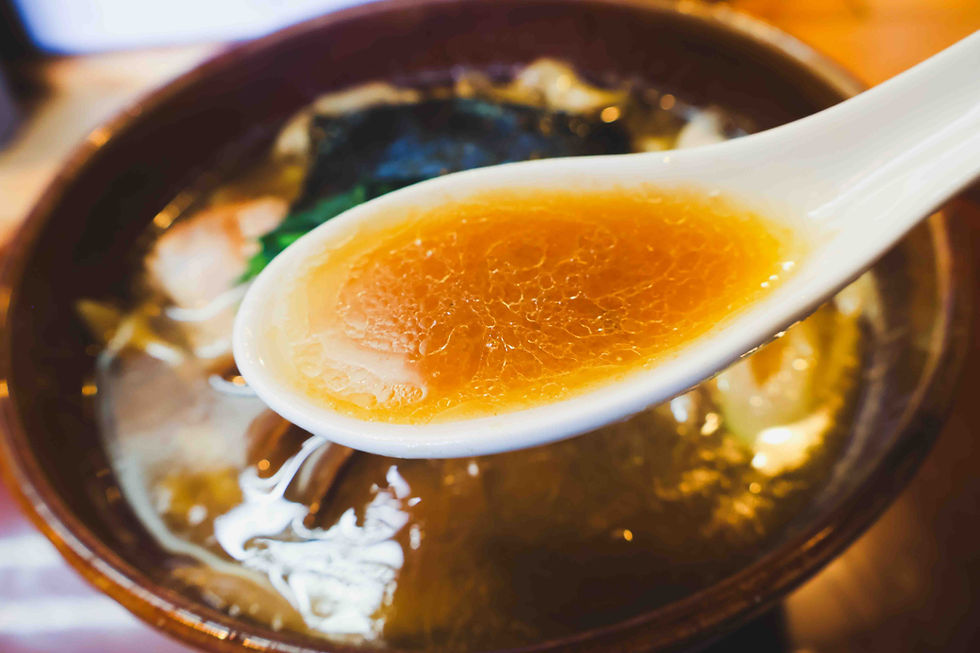
The soy sauce comes through strong and, surprisingly, on the sour side. The chashu pork gets called out repeatedly as unusually tender, and it held up its end.
The Tsukemen
The tsukemen (dipping ramen) noodles come in two varieties (techincally three). One version is more soba-like, which puts the wheat flavor of that pressure-cooked noodle front and center.
Flavor-wise, the dipping broth is just as meaty as the chuukasoba, maybe more so. It's the same intense, in-your-face profile, but is noticeably more fish-forward, even though that funky pork smell is still the first thing you notice.

The soy sauce again comes through strong and sour. It’s a different balance than the ramen, but it’s built from the same unfiltered, don’t-smooth-it-out approach.
Matsuo Seibaku Ramen — Worth the Trip Out
Soshigaya-Okura isn’t a neighborhood most visitors think to detour for, but if you’re curious about what a pressure-cooked noodle actually tastes like, Matsuo Seibaku and its ramen is worth it.

If you’re mapping out a broader Tokyo ramen itinerary around lesser-known neighborhoods like this one, our Tokyo Ramen Guidebook covers spots like this alongside the more obvious destinations.


