Mejiro Ramen: Marucho and the Roots of Tsukemen in Tokyo
Updated: Feb 5
When people talk about Mejiro ramen, there usually isn’t much to mention.

Mejiro is quiet. Residential. Almost understated for a Yamanote Line stop. But hidden in this calm neighborhood is one of Tokyo’s most historically important ramen shops - Marucho (丸長 目白店).
Marucho has been serving ramen since the 1950s, and its influence stretches far beyond Mejiro.
From Nagano Soba to Ogikubo Ramen
The family behind Marucho originally came from Nagano, where they worked as soba makers. When they brought their noodle-making skills to Tokyo, they applied soba techniques to a new medium.

That crossover helped shape what eventually became known as Ogikubo ramen: a Tokyo shoyu (soy sauce)-based style still popular today.

At a time when ramen was still finding its identity, Marucho stood at the intersection of soba and ramen culture. And that intersection is exactly where something important happened.
Marucho and the Origins of Tsukemen
While Taishoken is often credited as the birthplace of tsukemen (dipping ramen), Marucho’s role in the development of dipping ramen came earlier - and quietly.

By serving noodles and soup separately, Marucho helped lay the groundwork for what tsukemen would eventually become. This wasn’t the thick, punchy dipping ramen we associate with modern shops. It was lighter. More restrained. Rooted in soba traditions.

Over time, that idea spread. Shops branched off. Styles evolved. And a family tree emerged - one that runs straight through Ogikubo, Taishoken, and much of Tokyo’s tsukemen landscape today.
Marucho may not always get top billing in the history books, but its fingerprints are everywhere.
The Tsukemen at Marucho Today
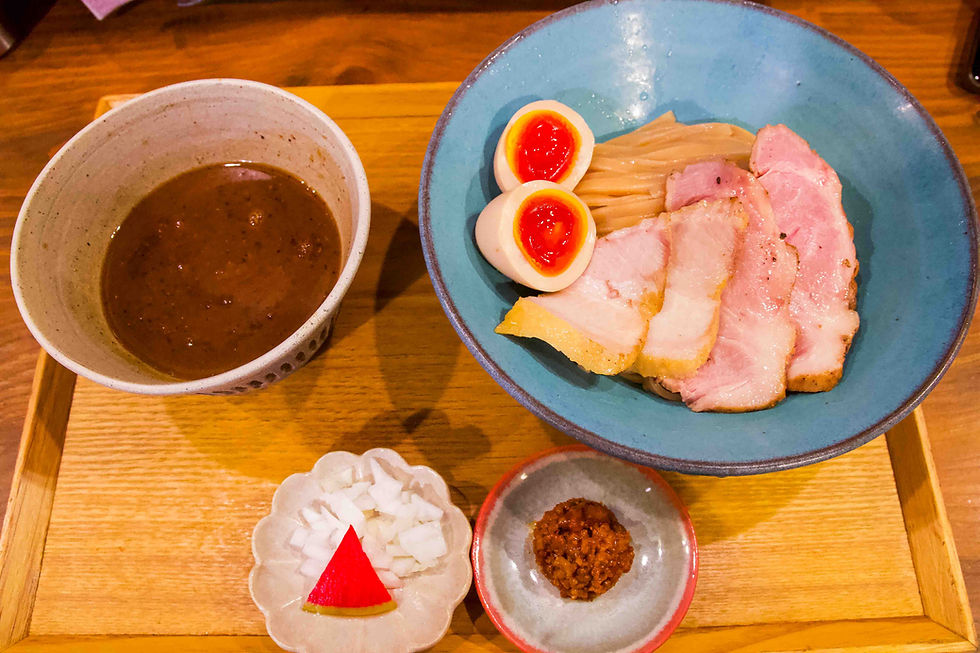
The tsukemen served at Marucho in Mejiro still reflects those origins.

The dipping broth is relatively light, especially by modern standards, but it carries a distinct profile: a gentle saltiness, a touch of sweetness, and a noticeable peppery and slightly sour edge.

The noodles aren’t especially thick by tsukemen standards and keep things straightforward - designed to work with the soup rather than overpower it.

If you visited the original Ogikubo shop before it closed, the flavor will feel familiar. That same balance is still here. You can customize your bowl in a few ways - pictured here with extra vegetables and menma (bamboo shoots). Shredded pork rounds it out, instead of the pork strips more commonly seen with this style.
Mejiro Ramen & Why Marucho Still Matters
In a city obsessed with what’s new, Marucho represents something else entirely. It’s simply continuing a style that helped shape Tokyo ramen in the first place.

For anyone interested in tsukemen history, Ogikubo ramen, or how soba culture influenced ramen, Marucho isn’t just another old shop. It's a missing chapter many people skip.
And in a quiet corner of Mejiro, it’s still being served the same way it always has. Map Link