


Mugyu Vol. 2: Nagoya Cochin Chicken Ramen in Kyoto
Mugyu in Kyoto specializes in chicken ramen, full stop. Every bowl on the menu runs through Nagoya Cochin, a purebred heritage chicken that gets treated with the kind of reverence French kitchens reserve for Bresse poultry.

I ate at Mugyu Vol. 2 (ラーメンムギュVOL.2 烏丸蛸薬師店), the newer of Mugyu's two Kyoto locations. I haven't made it to Vol. 1 (their flagship shop) yet, but the menu's the same at both.

Seating is counter-only — a long bar wrapped around the open kitchen — with one exception: a small four-top table tucked in the back.
Mugyu Ramen Vol. 2 in Kyoto - Menu Options
The menu runs four ways. Onibara Kuro (Black) pairs the Nagoya Cochin chicken soup with a saishikomi shoyu — a twice-brewed soy sauce with the kind of natural sweetness that's distinctly Kyoto.
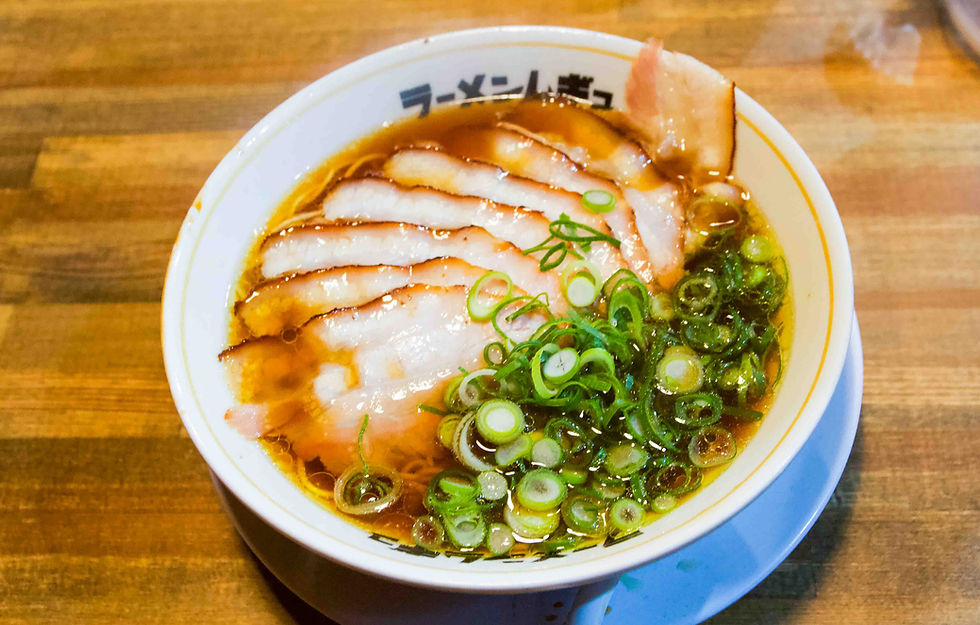
Onibara Shiro (White) takes that same chicken-forward soup and swaps in a usukuchi-based (lighter) soy sauce instead, landing on a paler, golden broth with flat, hand-kneaded noodles.

If you want something without broth, there's the Nagoya Cochin chicken oil mazesoba. It's built on rendered Nagoya Cochin chicken fat, soy sauce, and Mugyu's own thick, chewy noodles. It's also the one dish on the menu where a large portion doesn't cost extra.
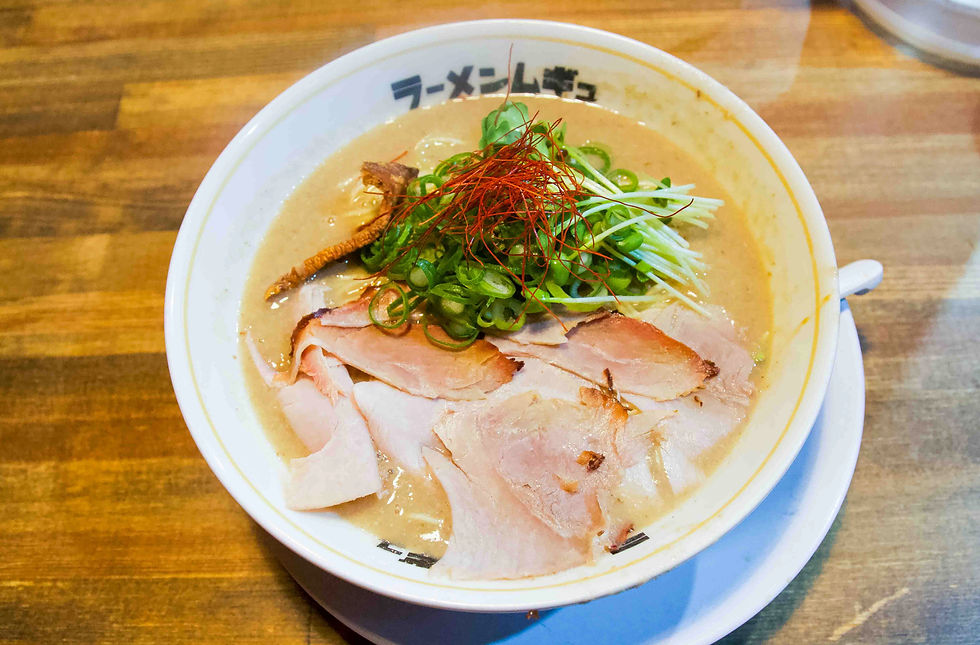
Then there's noukou tori soba, the richest of the four. It features a soup built from a mix of vegetables and chicken bones that comes out sweeter and much thicker than the other two soups.

All four are worth ordering, and the split between the two Onibara bowls is really the easiest way to figure out which direction you lean — the sweeter, fermented shoyu route or the lighter, more golden one.
What Goes Into Every Bowl
Mugyu treats the supporting cast as seriously as the chicken. The water — in the soup and in what's poured for guests — is filtered soft water. The chashu is Kyotanba Kogen pork, raised in Nantan in the hills south of the city, marinated overnight in a house-made shoyu koji, then hung in a kettle and roasted to seal the juices in.
The noodles come from Menya Teigaku, a long-running Kyoto noodle maker, cut two ways — thin and straight, or flat and hand-kneaded — and matched to whichever soup they're going into. The negi (spring onions) are Kyoto Kujo negi, picked that same morning and cut right before delivery. And on the counter, there's a house-made nin-kara, a garlic-chili condiment you can spoon into the bowl or just as easily over rice (it's really good).

The soy sauce gets its own mention, and it's clearly a point of pride here: a nido jukusei saishikomi shoyu from Sawai Shoyu, a brewery running since 1879. It's still made the old way — wooden barrels, big kettles, koji fermentation steered by feel rather than formula. That's the kind of detail most ramen shops wouldn't bother explaining on a wall, and Mugyu does. Map Link


